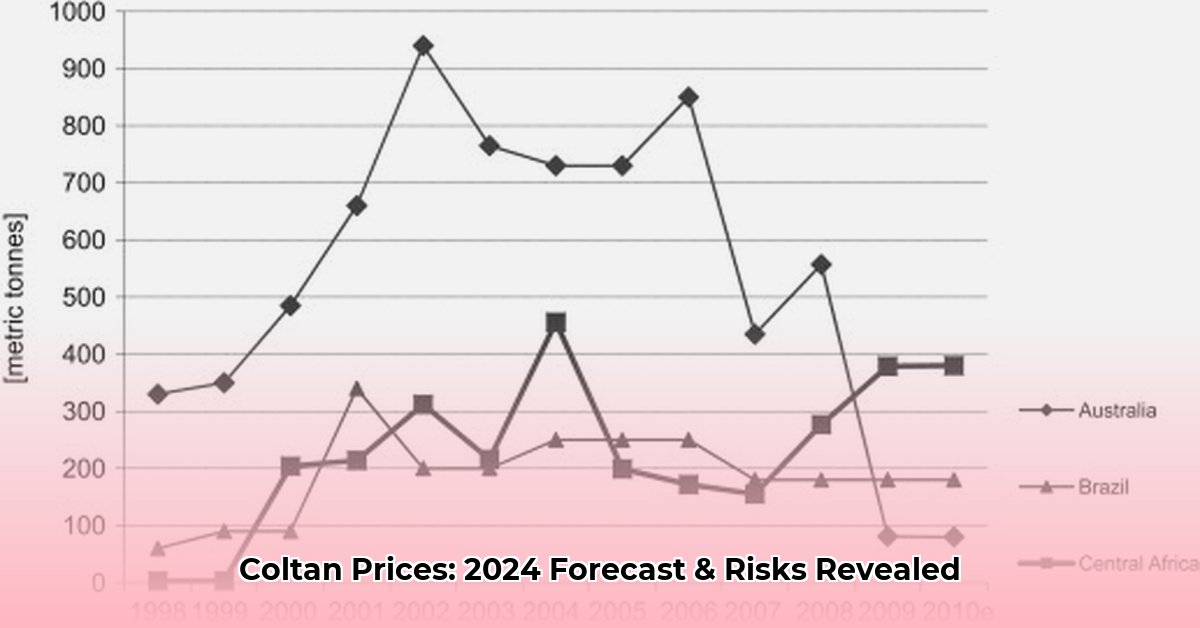
Coltan Market Dynamics: Unpacking the Price Volatility
The coltan market, while seemingly obscure, plays a crucial role in the global electronics industry. Its price, however, is anything but stable, exhibiting significant volatility driven by a complex interplay of factors. Understanding these dynamics is critical for businesses across the supply chain, from mining companies to electronics manufacturers. This article delves into the key drivers of coltan price fluctuations, analyzes historical trends, and offers insights into potential risks and mitigation strategies for 2024 and beyond. For more on market volatility, see this helpful resource on market crashes.
Tantalum: The Driving Force Behind Coltan's Value
Coltan's value primarily stems from its tantalum content (a refractory metal highly valued for its use in electronics). Tantalum's role in producing high-performance capacitors for smartphones, laptops, and other electronic devices directly impacts coltan demand and, consequently, its price. Increased demand for tantalum translates to higher coltan prices, while decreased demand has the opposite effect. However, factors beyond tantalum demand also affect the ultimate price.
Key Factors Influencing Coltan Prices
Several interconnected factors contribute to coltan's price volatility:
- Tantalum Demand: Global demand for electronics directly impacts tantalum (and thus coltan) demand. Growth in smartphone sales or the adoption of new technologies requiring tantalum capacitors can quickly increase prices.
- Coltan Grade and Quality: The concentration of tantalum within coltan ore varies significantly. Higher-grade coltan (with higher tantalum content) commands higher prices. Lower-grade ore requires more processing, increasing costs and potentially impacting the final price.
- Refining Costs: The process of extracting and refining tantalum from coltan is energy-intensive and complex, incurring significant costs. Fluctuations in energy prices or changes in refining technology can directly impact the final price of coltan.
- Geopolitical Instability: A significant portion of coltan production originates from politically unstable regions, notably the Democratic Republic of Congo. Conflict, political unrest, or disruptions to mining operations due to security concerns can dramatically impact supply and cause price spikes.
Coltan Price History and Future Outlook
Past coltan price trends reveal significant volatility. Periods of high tech growth, such as around 2000 and 2011, correlated with significant price increases. However, predicting future prices remains challenging due to the interplay of various factors. Technological advancements in tantalum recycling, for instance, hold the potential to significantly alter the market dynamics, potentially reducing prices in the long term. "The unpredictable nature of geopolitical factors and economic shifts creates a degree of uncertainty," notes Dr. Anya Sharma, Senior Economist at the Global Commodities Institute.
Ethical Sourcing and the Coltan Market
The ethical implications of coltan mining have garnered increased attention. Concerns about conflict minerals (coltan mined in conflict zones and used to finance armed groups) have driven a push for ethical and sustainable sourcing. Demand for "conflict-free" coltan is growing, potentially creating a price premium for responsibly sourced materials. However, the extent to which this premium will endure remains uncertain.
Key Risks and Mitigation Strategies in the Coltan Market
The coltan market is inherently risky. Several key threats require careful consideration and proactive mitigation strategies:
| Risk Factor | Likelihood | Impact | Mitigation Strategies |
|---|---|---|---|
| Geopolitical Instability | High | High | Diversify sources, robust supply chain risk management, conflict-free sourcing programs |
| Technological Disruption | Medium | Medium | Investment in R&D, adaptation to evolving tantalum needs, exploration of alternative materials |
| Ethical Concerns | High | High | Strict due diligence, certifications (e.g., Fairtrade), transparent supply chains |
| Price Swings | High | Medium | Price hedging strategies (where appropriate), long-term contracts, inventory management |
Navigating the Coltan Market in 2024: A Strategic Approach
The coltan market presents both challenges and opportunities. Successfully navigating this complex landscape requires a proactive approach incorporating short-term and long-term strategies. Short-term measures might include diversifying suppliers, negotiating flexible contracts, and employing robust inventory management practices. Long-term strategies, however, focus on building resilience through strong supplier relationships, investing in market intelligence, refining demand forecasting, and exploring alternative materials. "A data-driven approach, combined with a clear understanding of geopolitical risks, is critical for success in this volatile market," emphasizes Mr. David Chen, Head of Procurement, Global Electronics Corp.
Key Takeaways:
- Coltan price volatility is driven by a complex interplay of factors, ranging from tantalum demand to geopolitical instability.
- Proactive risk management is crucial. Diversification, strong supplier relationships, and detailed market intelligence are essential.
- Long-term strategies focus on building supply chain resilience and adapting to technological advancements and evolving ethical standards.
- Success requires a combination of short-term tactical responses and long-term strategic planning, informed by rigorous data analysis and expert insights.